The New Engineering Team: How AI Is Changing Team Size and Structure
 Jacqui Vreeland

Introduction
AI is changing how software gets built. Developers are now able to generate code faster, automate routine tasks, and move from an idea to a working solution in less time than ever before.
However, software development is not going away. If anything, demand for software is growing. Companies are building more internal tools, more customer experiences, more automation, and more data-driven platforms.
What’s changing is how engineering teams are structured and the types of roles organizations need to succeed.
As productivity increases, expectations are rising. The companies that adjust their team structure and hiring strategy now will be the ones that move faster and deliver more value.
Here is what engineering leaders should expect as AI reshapes development teams.
Smaller Teams, Higher Expectations
AI tools are increasing individual productivity. Work that once required multiple developers or long timelines can now be completed by a smaller team in a shorter period of time.
This shift doesn’t mean companies need fewer developers overall. It means the focus is changing from team size to team effectiveness.
Many organizations are moving toward:
- Leaner teams that are expected to deliver more output
- Faster release cycles and shorter feedback loops
- Greater pressure on developers to move from concept to production quickly
The question leaders are asking is no longer “How many developers do we need?”
The better question is, “Do we have the right people to deliver at the speed the business now expects?”
Experience Matters More Than Ever
AI is a powerful tool, and it works best when used by experienced engineers.
Senior developers know how to design scalable systems, evaluate tradeoffs, and validate AI-generated code. They understand where automation helps and where human judgment is critical.
Without that experience, AI can introduce risk. Teams may move quickly but create technical debt, security issues, or unstable architecture that slows them down later.
Because of this, many organizations are adjusting their talent mix by:
- Prioritizing senior and mid-level engineers who can guide AI-assisted development
- Expecting stronger system design, architecture, and problem-solving skills
- Reducing reliance on entry-level roles without strong oversight
AI is not replacing developers. It is raising the level of expertise required to build reliable, scalable software.
The Bottleneck Is Moving to Product and Specialization
As coding becomes faster, the biggest constraints are shifting. Many teams are discovering that development speed is no longer the main limitation.
The real bottlenecks are now:
- Unclear requirements
- Poor prioritization
- Data availability and quality
- Infrastructure limitations
This shift is increasing demand for specialized roles that support faster delivery, including:
- Product Owners who translate user needs into clear priorities and actionable work
- Data Engineers who prepare and manage reliable data pipelines
- Cloud and platform engineers who support scalable, secure environments
- AI integration or MLOps specialists who help operationalize new capabilities
The Product Owner role is becoming especially important. When developers can build faster, teams need strong direction to ensure they are building the right features at the right time. Without clear product leadership, increased development speed can create more rework and wasted effort.
Organizations that strengthen product and specialized functions will be better positioned to take advantage of AI-driven productivity.
Rethinking Your Hiring Strategy
All these changes point to a larger shift in how engineering leaders think about staffing.
The goal is no longer just to add more developers. The goal is to build the right mix of experience, specialization, and flexibility to support faster delivery and changing business needs.
Many companies are adapting their approach by:
- Strengthening senior talent to provide technical leadership and oversight
- Adding specialized roles to remove bottlenecks outside of core development
- Using contract or project-based expertise to quickly support new initiatives or emerging technologies
This flexible model allows organizations to move quickly without overcommitting to long-term headcount before needs are fully defined.
It also reduces risk. As AI continues to evolve, hiring the wrong roles or building the wrong team structure can slow progress instead of accelerating it.
Software Development Is Changing, Not Disappearing
There is a lot of discussion about AI replacing developers. In reality, the opposite is happening.
Companies are building more software than ever before, business teams expect faster delivery, customers expect better digital experiences, and operations teams expect more automation and insight.
The demand for technical talent is growing. What’s changing is the type of talent required and how teams are organized.
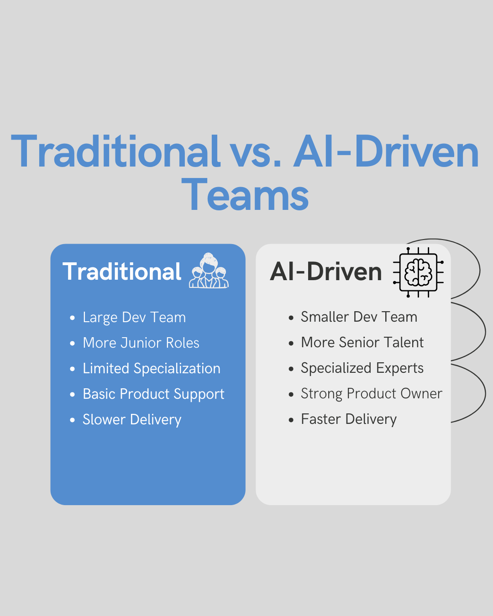
The new model looks different:
- Smaller, more efficient teams
- Higher expectations for individual contribution
- Greater reliance on senior experience
- Stronger product leadership
- More specialized expertise to support complex environments
For organizations that adapt early, this shift creates a significant competitive advantage.
Building for the Next Era of Development
AI is reshaping how software teams work. It is increasing speed, raising expectations, and changing where the real constraints exist.
For engineering leaders, the opportunity is not just adopting new tools. It is aligning your talent strategy with how development is changing.
Emergent Staffing helps organizations tailor their talent search to find the skills and experience needed for this new environment. Whether that means senior engineers, specialized technical roles, or strong product leadership, the right people make the difference between faster delivery and added complexity.
This is an exciting time to be part of software development. The teams that adjust their structure and hiring strategy now will be the ones leading the next generation of innovation.